
Defying the patterns of the past to inspire a legacy of hope
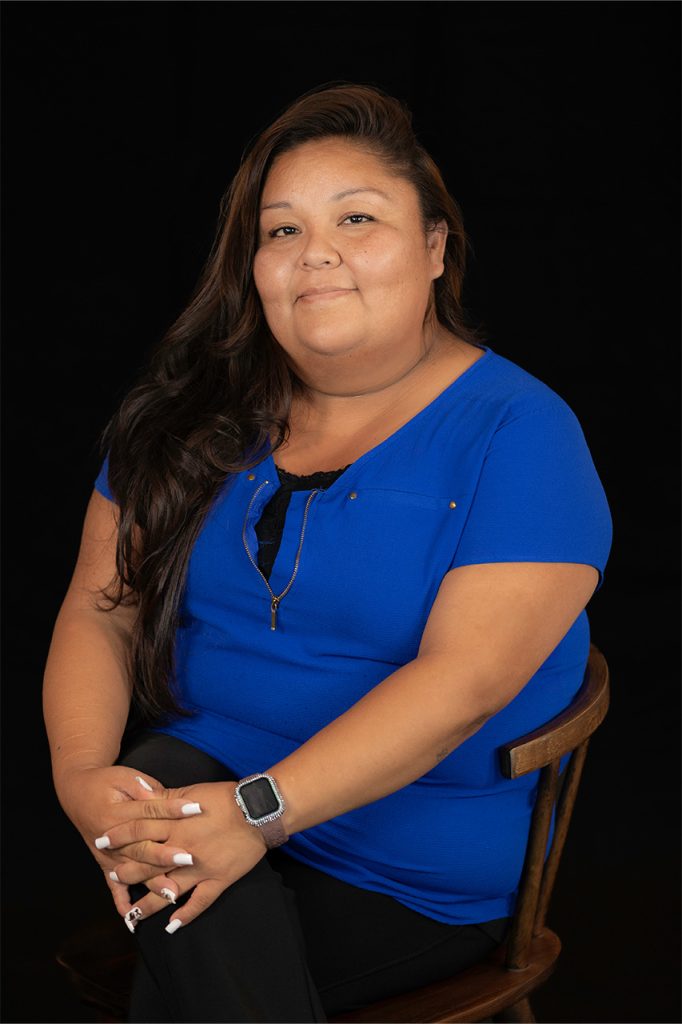
Herberta’s energy is infectious, her striking smile and vibrant laugh commanding the room when you first meet her. A proud member of the Ute Mountain Ute Tribe, her world is centered around her family: nine children — four of her own and the five nephews she helped raise — four grandchildren, a supportive partner, and a loving mother. She’s a fixture in her community, working with various organizations to help those who need it most.
But behind her peace is a story of deep struggle, the courage to rewrite it, and the fortitude to effect change.

I’ve been through so much throughout my life. Alcohol and drugs have always been a part of it.
Herberta lost much of her childhood as she grew up surrounded by substance use and violence — struggles often inherent within her community. At age eight, she began drinking. She continued throughout her teenage years, leading to time in juvenile detention facilities.
As an adult, Herberta’s trauma seemed nearly insurmountable. Alcohol and drugs remained constant, and she was trapped in a violent relationship where she lived in constant fear.
In November 2018, she lost her brother to health issues stemming from his own substance use. The two siblings were extremely close, with only three days separating their birthdays. They spent a significant amount of time together and often shared in their celebrations.
Her brother’s passing was a catalyst for what Herberta calls her downward spiral. Alcohol and drug use took hold. She served time in jail, losing her home and cars. Her children were removed from her custody, and she battled thoughts of suicide. “I just went downhill. I lost my kids, I lost my home, I lost my cars — I lost everything,” she says.
But when Herberta’s abusive partner went to prison, she found freedom and the strength to move forward.
I got the space to make a choice. I didn’t have an option to run back. It was a blessing in disguise.
When Herberta and her current partner first met, they were both still using. But her partner’s support of and care for Herberta were evident from the start.
“My mom would let my kids come visit with me, so he would try to sober me up for those visits,” Herberta recalls. “After a while, he just completely stopped and took care of me while I was using.”
One morning, Herberta made the decision for herself.
“I literally woke up and was crying because it hurt. It was physical pain,” Herberta says. “It was the longest six months of my life because it hurt: the emotions, the regret, and the reality coming back. It was very, very hard, but I was tired of feeling the way I felt. I didn’t like feeling sick; I didn’t like feeling sad. I knew I could fix that sadness by getting sober and getting my kids back.”
Today, Herberta has been sober for six years, and she and her partner walk alongside one another in their recovery journeys.
“He chose to help me build myself as an individual,” she says with a smile. “I met someone willing to let me be me.”
Nobody gave up on me. I still had people there who saw the good in me and believed I could do good.
Before she decided to stop using, Herberta struggled to remain employed. However, she has always been one to rely on herself, and as she committed to her recovery, she was ready to return to the workplace. “I honestly thought that I had lost my position within the community, within the Tribe, within the departments,” she admits.
She began working in her Tribe’s financial department, where she found purpose and encouragement from her director and team. While there, she found opportunities with the Colorado Cross-Disability Coalition and the newly-founded Western Slope Native American Resource Center. In assistant director roles for both organizations, Herberta could give back to her community by helping others understand and access critical resources, including Health First Colorado (Colorado’s Medicaid Program), empowering them to live better lives.
We’re all still healing, we’re all still learning.
In Herberta’s rural community of Towaoc, Colorado, access to care is limited, and families must often travel hours to the Front Range, Montrose, or Grand Junction for services. A skepticism of processes and programs remains high. But Herberta is working to change that.
She believes that addiction starts with mental health and that being proactive rather than reactive is key. Through her positions with WSNARC and CCDC, Herberta helps others navigate recovery, mental health care, Health First Colorado coverage, and disability benefits, often walking individuals through enrollment forms and materials herself to ensure applicable benefits are received by those who need them most. She’s working to bring the Wellbriety program to the area so Native Americans can receive culturally appropriate support tailored to their own beliefs, age, and gender.
Herberta sees the difference access can make firsthand: Her nephews receive Health First Colorado coverage, which helps them receive care they otherwise couldn’t, including MRIs and behavioral health support.
For Herberta, that access means more than just medical care — it’s a step toward a different future and breaking the cycle of generational trauma that’s so prevalent within her community.
Change isn’t always fireworks and rainbows.
Transcript
“Because everybody may not see it, but change doesn’t happen all in one day. Change isn’t always freaking fireworks and rainbows, you know? It’s those little things and those little changes that show you — you know — it’s happening, it’s working.”
Hereberta reflects on how her experiences have shaped her and the changes she has witnessed, from her mother attending a Native American boarding school to her grandmother speaking only Ute and wearing traditional clothing she had made herself.
“There’s an aspect where we can start the healing process,” she says. “And to me, these are such big things because it truly is generational trauma that we have to change for our children.”
Herberta sees the changes happening within herself and her own home. While she began drinking at 8 years old, her son, who’s now 18, didn’t start until 14 — and she’s both proud of him and grateful that he’s had a longer childhood than she did. “To me, that’s the start of it,” she says. “8 to 14 is a significant age gap. His daughter may not start until she’s 21, and her daughter may not even drink.”
Herberta is confident that if she and her family can experience such changes, others can, too.
“Everybody may not see it. Change doesn’t happen all in one day. It’s those little things that show you it’s happening, it’s working. And if I can do it, I know it will inspire somebody else. And that family can inspire another. It’s contagious.”